Murió Carlos Riganti, fundador de Alas y figura médica del rock argentino
El baterista que cofundó Alas en 1974 y también ejerció como pediatra, inmunólogo y alergista falleció a los 75 años. Su esposa Viviana confirmó la noticia, mientras colegas y músicos recordaron su influencia en varias generaciones.
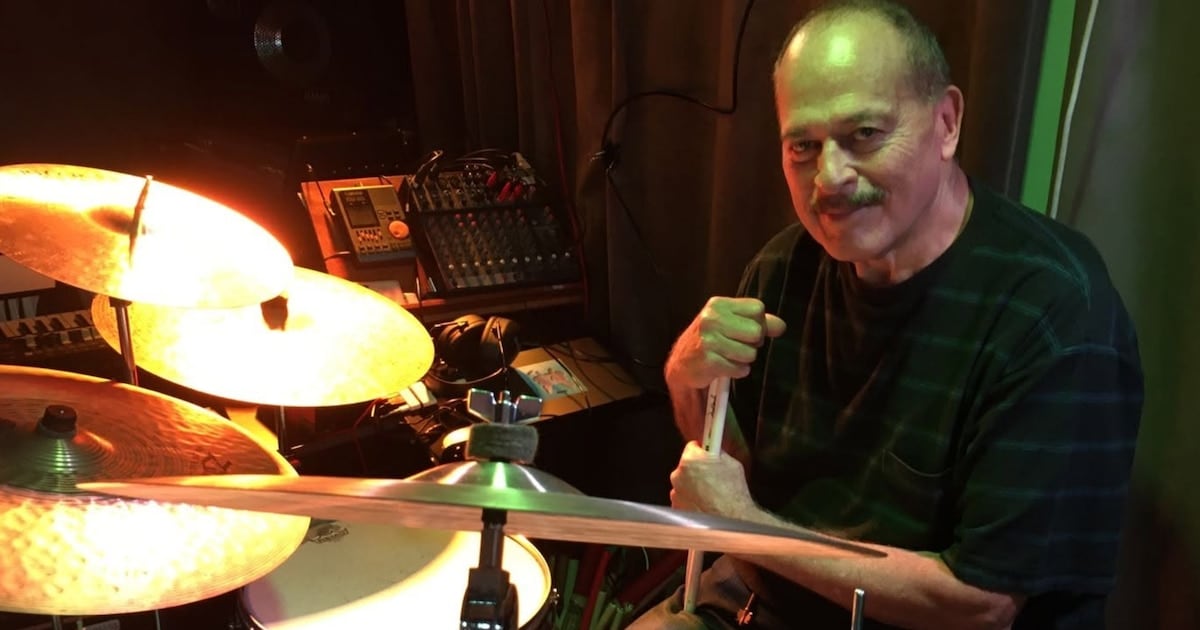
Carlos Riganti, baterista fundador de Alas y profesional de la medicina, murió este viernes a los 75 años. La noticia fue confirmada por su esposa, Viviana, mediante un mensaje publicado en la cuenta de Instagram del músico y acompañado por una fotografía familiar. Los restos serán velados este sábado, de 16 a 22, en la sala velatoria Casa O'Higgins, en la Ciudad de Buenos Aires.
Riganti began su recorrido musical en 1970 como integrante de Materia Gris, grupo en el que participó en "Oh, perra vida de Beto", piece considered one of the earliest rock operas in Argentina. Four years later, he founded Alas together with keyboard player Gustavo Moretto, a friend from his adolescence in San Isidro, and bassist Alex Zucker. The trio made its debut in 1975 at the Teatro IFT in Buenos Aires.
Una banda conRaúl Porchetto y otros proyectos
In 1976, Alas released its self-titled album, organized around two extended pieces: one rooted in tango and another built on vidala rhythms. That same year, the band performed at the Teatro Coliseo with the bandoneon occupying an increasingly prominent place in its sound. The performance earned praise from Astor Piazzolla.
When Zucker moved to the United States in 1977, the group brought in Pedro Aznar, who was then 17 years old. With him, Alas recorded "Pinta tu aldea", a work that was not released until 1983. In parallel, Riganti worked as a session drummer with Raúl Porchetto on the album "Volando de vida" in 1978. He later traveled to Europe, where he played alongside Moris and recorded the album "Mundo Moderno".
Upon his return to Argentina, Riganti joined Prema, the band led by Piero, and took part in tours through the interior of the country and along the Atlantic coast. He also participated in Los Cuerpos Cavernosos and Diga 33, the latter made up entirely of physicians. These experiences linked his musical activity with the medical profession that would define much of his life.
La medicina como otra trayectoria
Outside the stages, Riganti practiced as a pediatrician, immunologist and allergologist at the Hospital Pedro de Elizalde and in his private office in General Pacheco. Oscar Giunta described him as "un baterista señero e influencia fundamental de varias generaciones de bateristas y músicos en general", and also highlighted his teaching and medical work.
“No lo puedo creer, qué tristeza. Descanse en paz, Carlitos.”Charly Alberti
Alas reunited in 2003 for performances in the United States. The group released "Mímate bandoneón" in 2005 and, in May 2025, played at the Teatro Ópera as part of the Héroes del Rock Nacional cycle. The last public appearance preserved the connection between the project founded by Riganti and the generation of musicians that came after him.
- Riganti began playing in Materia Gris in 1970 and later founded Alas with Gustavo Moretto and Alex Zucker in 1974.
- With Alas, he released a self-titled album in 1976 and performed at the Teatro Coliseo.
- After Zucker left, Pedro Aznar joined the group and recorded "Pinta tu aldea", published in 1983.
- He worked with Raúl Porchetto and Moris, and later joined Piero's Prema.
- He practiced medicine for decades as a pediatrician, immunologist and allergologist.
Colleagues and musicians paid tribute to Riganti after his death. Charly Alberti shared a video with him and wrote: "No lo puedo creer, qué tristeza. Descanse en paz, Carlitos." Andrea Álvarez also expressed condolences. Riganti's career joined two fields that marked Argentine cultural life: the development of rock and tango rock, and the medical care of children and allergy and immunology.